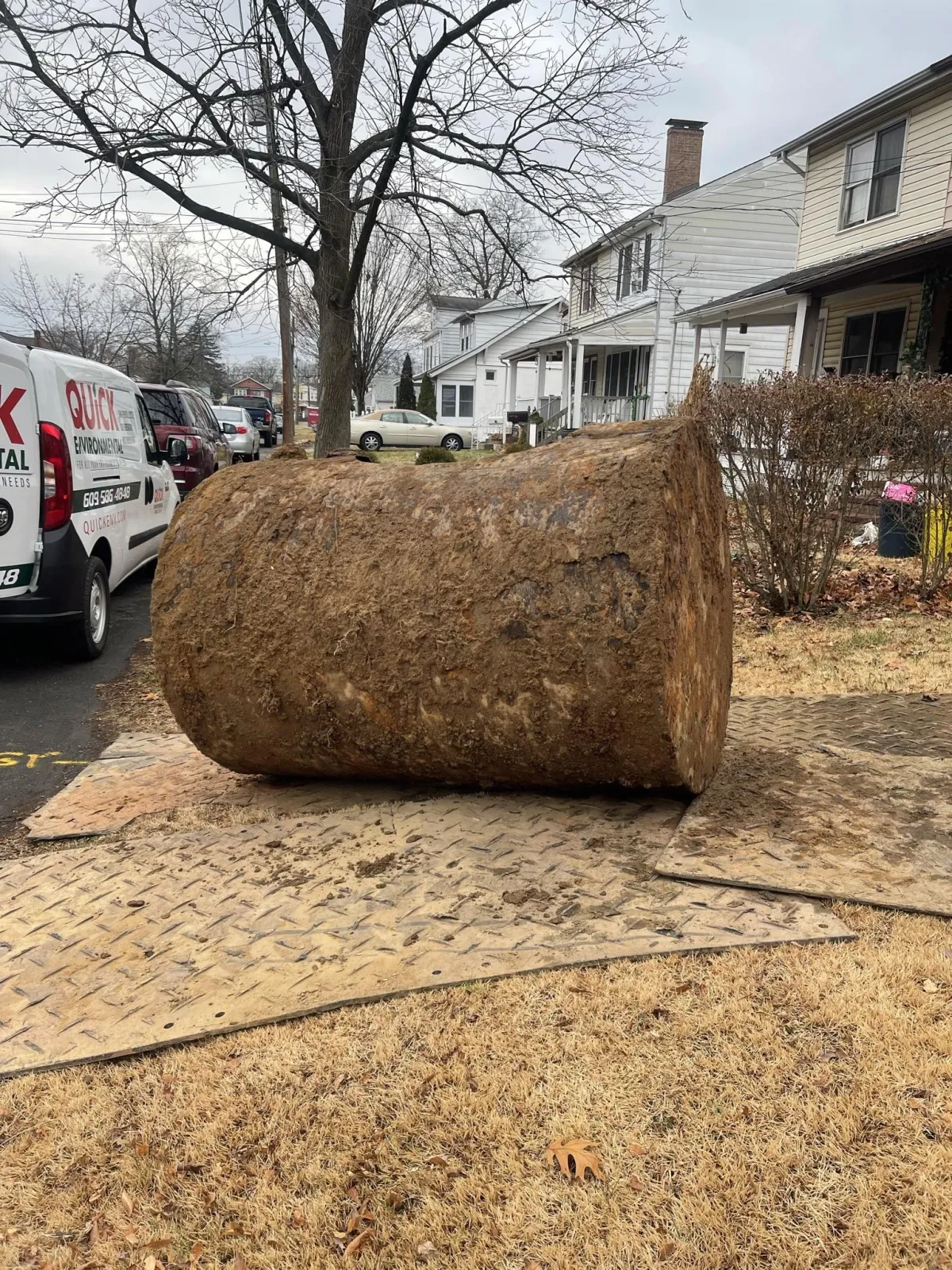
Underground Storage Tanks in NJ: Rules & Removal Strategies
What Lies Beneath Could Cost You
Underground storage tanks (USTs) once powered New Jersey’s economy, fueling gas stations, factories, and apartment buildings alike. But decades later, many of those buried tanks have become environmental time bombs.
As tanks corrode, they can leak petroleum, solvents, or other hazardous substances into soil and groundwater. What starts as a small leak can lead to thousands of dollars in cleanup costs, NJDEP violations, and potential health risks.
To protect both property owners and the environment, the New Jersey Department of Environmental Protection (NJDEP) enforces strict UST regulations for installation, operation, closure, and remediation.
This article breaks down everything you need to know about Underground Storage Tanks in New Jersey, from compliance rules and removal procedures to cost expectations and how Oak Environmental helps businesses stay safe and compliant.
What Is an Underground Storage Tank (UST)?
An Underground Storage Tank (UST) is any tank and its associated piping where at least 10% of its volume lies beneath the surface of the ground. These systems are typically used to store petroleum products, heating oil, or hazardous chemicals.
Common UST Types
Petroleum Tanks: Gasoline, diesel, or heating oil
Chemical Tanks: Solvents, lubricants, and industrial materials
Emergency Generator Tanks: Often found at hospitals, offices, and government buildings
Environmental Risk
Over time, even well-installed tanks can deteriorate due to corrosion, improper maintenance, or ground movement. When leaks occur, contaminants can migrate through the soil, seep into groundwater, and even enter nearby buildings through vapor intrusion, posing serious health and regulatory risks.
NJDEP Regulations Governing Underground Storage Tanks
The UST Program in New Jersey operates under a combination of state and federal laws, ensuring all underground tanks meet environmental safety standards.
1. Regulatory Framework
Federal Oversight: U.S. EPA’s Resource Conservation and Recovery Act (RCRA) Subtitle I
State Oversight: NJDEP’s Underground Storage Tank Rules (N.J.A.C. 7:14B)
These rules set standards for installation, operation, leak detection, and closure for both active and abandoned UST systems.
2. Who Must Comply
UST regulations apply to:
Commercial and industrial properties with underground fuel or chemical tanks
Fuel distributors, gas stations, and transportation facilities
Municipalities, schools, and institutions with on-site tanks
Residential tanks under 2,000 gallons used solely for home heating oil are often exempt from full regulation but must still be handled according to NJDEP environmental standards during removal.
3. Registration and Permitting
All regulated UST systems must be registered with NJDEP.
Permits are required for installation, modification, and removal.
Owners must maintain records of testing, maintenance, and repairs for inspection.
4. Leak Detection and Monitoring
UST systems must have approved leak detection and monitoring systems, such as:
Automatic Tank Gauging (ATG)
Interstitial Monitoring for double-walled tanks
Groundwater or vapor monitoring wells
Failure to maintain leak detection systems is one of the most common violations cited by NJDEP.
5. Reporting Leaks
Any suspected or confirmed discharge must be reported to NJDEP’s Hotline (1-877-WARNDEP) within 24 hours. Immediate action is required to contain the release and initiate an investigation.
The UST Removal Process in New Jersey
Whether you’re retiring an old system or responding to a leak, proper removal requires licensed oversight, documentation, and testing.
Here’s how the process typically works:
Step 1: Pre-Removal Assessment
Obtain required NJDEP permits for closure.
Review tank records, drawings, and historical usage.
Evaluate the potential for soil or groundwater contamination.
Step 2: Tank Excavation
A Licensed Subsurface Evaluator (SSE) oversees excavation.
The tank is carefully exposed, emptied, and vented to prevent fire hazards.
Associated piping is removed or sealed in accordance with regulations.
Step 3: Tank Cleaning and Disposal
Any remaining fuel or sludge is cleaned and disposed of by a certified waste transporter.
Tanks are then cut, cleaned, and recycled at approved facilities.
Step 4: Soil Sampling and Analysis
Soil samples are collected from beneath and around the tank pit.
Samples are tested for petroleum hydrocarbons, VOCs, and metals.
If results exceed NJDEP remediation standards, further investigation or cleanup is required.
Step 5: Groundwater Testing (If Required)
If contamination is suspected to have migrated, groundwater monitoring wells are installed and tested to evaluate the plume extent.
Step 6: Reporting and Case Closure
Oak Environmental prepares and submits a UST Closure Report to NJDEP with lab data, disposal manifests, and site documentation.
If contamination is present, the site undergoes remediation. Once standards are met, an NJDEP Response Action Outcome (RAO) or No Further Action (NFA) letter is issued.
The Cost of UST Removal and Remediation
The cost of removing an underground storage tank in New Jersey can vary widely based on the tank’s condition, size, and site contamination.
Typical Cost Range
Service Estimated Cost Range
Tank Removal (Non-Leaking) $2,500 – $5,000
Contaminated Soil Excavation $5,000 – $20,000+
Groundwater Remediation $10,000 – $50,000+
Soil & Lab Testing $1,500 – $4,000
Regulatory Reporting Included with project
Cost Factors
Tank Size: Larger tanks require more excavation and disposal.
Material: Steel tanks are prone to corrosion; fiberglass tanks are easier to remove.
Depth & Accessibility: Urban or paved sites may need specialized equipment.
Contamination Extent: The more soil or groundwater impacted, the higher the remediation costs.
Regulatory Oversight: Projects under NJDEP review require additional reporting and certified professionals.
Investing in proper removal now prevents much higher costs later, often saving tens of thousands in penalties and emergency remediation.
Environmental Risks of Abandoned or Leaking USTs
Many older properties in New Jersey still have abandoned tanks buried underground, often forgotten for decades. These pose significant environmental and financial risks.
Common Consequences of Ignoring USTs
Soil and Groundwater Contamination from Petroleum Leaks
Vapor Intrusion into buildings, creating indoor air hazards
Costly Cleanup Orders issued by NJDEP
Loss of Property Value and Financing Complications
Legal Liability under the NJ Spill Compensation and Control Act — even for contamination you didn’t cause
A leaking tank is more than an environmental hazard; it’s a liability that can delay or derail property sales, loans, and redevelopment plans.
How Oak Environmental Manages UST Removal and Remediation
At Oak Environmental, we specialize in managing underground storage tank projects safely, efficiently, and in full compliance with NJDEP regulations.
Our Core Services
UST Investigation & Leak Detection
Identify and assess potential contamination quickly.NJDEP Permitting & Documentation
We handle the entire process, from permit applications to closure reporting.Tank Removal & Cleaning
Certified excavation, disposal, and decommissioning with proper waste manifests.Soil and Groundwater Sampling
Laboratory-grade testing to determine contamination levels.Remediation & Regulatory Closure
Cleanup design, implementation, and NJDEP-approved closure documentation (RAO/NFA).
Why Clients Trust Oak Environmental
Licensed Subsurface Evaluators (SSEs) with decades of field experience.
Proven success with commercial, industrial, and municipal tank projects.
Transparent cost estimates and efficient timelines.
Close coordination with lenders, attorneys, and NJDEP for fast case closure.
With Oak Environmental, you can remove, remediate, and restore your property — safely, efficiently, and fully compliant with NJDEP standards.
Preventing Future UST Issues
The best way to avoid contamination is proactive management.
1. Upgrade to Modern Systems
Use double-walled, corrosion-resistant tanks with leak detection and secondary containment.
2. Conduct Regular Monitoring
Schedule annual inspections and maintenance of active USTs.
3. Keep Accurate Records
Maintain all installation, maintenance, and testing documentation for NJDEP inspection.
4. Plan for Replacement or Decommissioning
Tanks older than 20–25 years should be evaluated for removal or replacement.
Benefits of Proper UST Removal and Closure
Regulatory Compliance: Meet all NJDEP and EPA requirements.
Liability Protection: Avoid penalties and lawsuits related to leaks.
Environmental Safety: Prevent soil and groundwater contamination.
Property Value: Clean sites are easier to sell or redevelop.
Peace of Mind: Confidence knowing your property is safe and compliant.
Case Example: Commercial Tank Removal Success
A New Jersey logistics company discovered two 10,000-gallon underground diesel tanks during expansion. Testing revealed minor soil impact from corrosion-related leaks.
Oak Environmental managed the entire process — from NJDEP permitting and excavation to sampling and reporting. Within eight weeks, both tanks were removed, the impacted soil was remediated, and NJDEP issued a Response Action Outcome (RAO) confirming site closure.
The client avoided regulatory fines, maintained full operational continuity, and saved thousands through early detection and efficient management.
Conclusion: Remove the Risk Before It Spreads
Underground storage tanks can quickly transform from assets into liabilities if ignored or improperly managed. Compliance with NJDEP regulations not only protects the environment but also safeguards your investment and reputation.
Whether you need help with tank removal, contamination assessment, or remediation planning, Oak Environmental delivers turnkey solutions designed for safety, compliance, and peace of mind.
Take Action Today
If you suspect a leaking or abandoned underground storage tank on your property, it’s important to act before a small issue becomes a costly problem. Oak Environmental specializes in commercial and industrial UST removal, environmental testing, and NJDEP-compliant remediation throughout New Jersey. Our certified professionals handle every stage of the process — from permitting and excavation to cleanup and closure — with safety, efficiency, and complete documentation. To learn how we can help you protect your property and maintain compliance, visit oaknj.com/contact to schedule a consultation today.
Oak Environmental — New Jersey’s trusted partner for underground storage tank management, removal, and remediation.
