Top Environmental Risks Delaying NJ Commercial Closings
When Environmental Issues Stop Deals Cold
You’ve negotiated the price, secured the financing, and scheduled the closing date. Everything seems ready until an environmental report lands on your desk. Suddenly, the finish line disappears.
In New Jersey’s complex commercial real estate market, environmental issues are among the leading causes of delayed or derailed closings. Even a single unknown underground tank or unresolved NJDEP case can freeze transactions for weeks or months.
According to the U.S. Environmental Protection Agency (EPA), nearly 1 in 10 commercial properties nationwide face some level of environmental contamination. In New Jersey alone, the NJDEP oversees more than 14,000 active remediation cases, many directly linked to real estate sales, refinancing, or redevelopment.
Most of these delays share one common theme: environmental surprises that could have been avoided with early due diligence.
In this article, we’ll break down the top environmental risks that slow down commercial closings in New Jersey and explain how Oak Environmental helps property owners, buyers, and lenders keep transactions moving smoothly.
The Role of Environmental Due Diligence in Closings
Before any commercial real estate transaction closes, environmental due diligence must confirm that the property is safe and compliant with state and federal regulations.
Why It Matters
Environmental due diligence:
Identifies contamination or environmental liabilities before purchase.
Protects buyers and lenders from future cleanup costs or legal action.
Ensures compliance with NJDEP and EPA remediation requirements.
The Core Tools
Phase I Environmental Site Assessment (ESA):
Non-intrusive review of records, property history, and site conditions to identify potential contamination known as Recognized Environmental Conditions (RECs).Phase II ESA:
If risks are found, this phase includes soil, groundwater, or vapor sampling to confirm contamination.Remediation & Case Closure:
If contamination exists, cleanup must meet NJDEP remediation standards, culminating in a Response Action Outcome (RAO) or No Further Action (NFA) letter confirming compliance.
Failing to complete these steps properly or finding issues late in the process is what leads to most closing delays.
Top Environmental Risks That Cause Delays
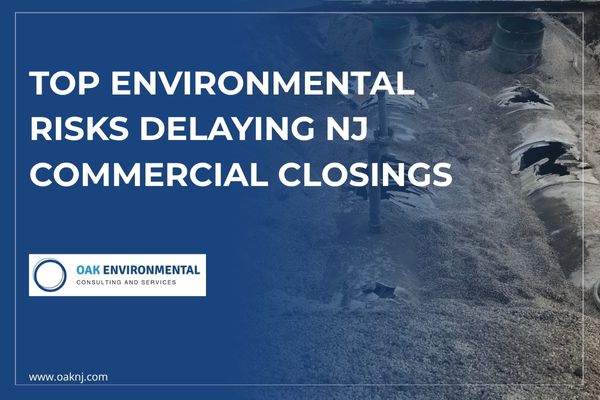
1. Undisclosed or Leaking Underground Storage Tanks (USTs)
Hidden or forgotten underground storage tanks are one of the most common and expensive deal disruptors.
Older commercial and industrial sites often have tanks used for fuel, heating oil, or chemical storage that were never properly closed. Over time, they can leak petroleum hydrocarbons into the surrounding soil and groundwater.
How It Delays Closings:
Lenders typically halt funding until the tank is removed and the site tested.
If contamination is found, remediation and NJDEP documentation (RAO/NFA) can take weeks or months.
Estimated Cleanup Cost:
Anywhere from $15,000 to over $250,000, depending on contamination levels and site complexity.
2. Historical Industrial or Dry-Cleaning Operations
New Jersey’s long industrial history means contamination isn’t always recent. Many properties once hosted manufacturing, metalworking, or dry-cleaning operations that used chlorinated solvents like PCE (perchloroethylene) and TCE (trichloroethylene).
Even if the site has been redeveloped into offices or retail, legacy contamination may remain in the soil or groundwater.
How It Delays Closings:
Buyers or lenders require Phase II testing to confirm contamination levels.
Transactions pause until the extent of contamination is known or mitigation plans are approved.
3. Soil and Groundwater Contamination
Contaminated soil or groundwater is a major barrier to closing. Sources can include:
Fuel spills or leaks.
Improper waste disposal.
Pesticide or chemical runoff.
Nearby industrial activity is migrating onto the site.
Once identified, cleanup must follow NJDEP remediation standards and be certified by a licensed professional.
How It Delays Closings:
Remediation, groundwater testing, and NJDEP case closure can take weeks to months, depending on contamination depth and extent.
4. Vapor Intrusion Concerns
Vapor intrusion occurs when chemical vapors from contaminated soil or groundwater migrate into buildings through cracks or utility lines.
This issue has become one of NJDEP’s highest priorities because it affects indoor air quality and occupant safety.
How It Delays Closings:
Testing and mitigation (such as sub-slab depressurization systems) may be required before occupancy.
Lenders often demand confirmation that vapor risks are fully addressed.
Common Sites:
Former dry cleaners, gas stations, or properties adjacent to known contamination areas.
5. Hazardous Building Materials (Asbestos, Lead, PCBs)
Older commercial properties often contain hazardous materials that must be handled according to federal and NJDEP regulations before renovation or demolition.
Common culprits include:
Asbestos in insulation, tile, or roofing.
Lead-based paint in pre-1978 structures.
PCBs are found in older electrical components or caulking.
How It Delays Closings:
Requires specialized surveys and abatement by licensed contractors.
Increases costs and may require additional permits before redevelopment.
6. Incomplete or Outdated Environmental Documentation
A surprisingly common and preventable delay comes from expired or missing environmental reports.
Examples include:
A Phase I ESA older than 12 months (invalid for lender use).
Missing NJDEP RAO/NFA letters from prior remediation.
Historical contamination cases with no current follow-up documentation.
How It Delays Closings:
Without valid documentation, lenders cannot confirm environmental compliance, forcing buyers to order new assessments or reopen old cases.
7. Off-Site or Adjoining Property Contamination
Even when your property is clean, nearby contamination can still create problems.
Pollutants can migrate through soil or groundwater, crossing property boundaries, a common issue in urban or industrial areas.
How It Delays Closings:
Lenders may request off-site data reviews or additional testing.
Buyers often negotiate price reductions or delay closing until the risk is quantified.
The Real Cost of Environmental Delays
Delays caused by environmental issues can ripple through every aspect of a transaction.
Financial Impact
Extended holding costs and interest payments.
Renegotiated loan terms or lost financing opportunities.
Legal and Regulatory Impact
Potential NJDEP enforcement if contamination is mishandled.
Liability under CERCLA or the NJ Spill Compensation and Control Act for new owners.
Reputational Impact
Buyers and lenders may view the property as “tainted.”
Future transactions may face extra scrutiny or devaluation.
According to the National Association of Realtors (NAR), commercial deals with environmental findings take 30–60% longer to close than clean properties, and nearly 1 in 5 fail to close entirely due to unresolved issues.
How to Prevent or Minimize Environmental Delays
Environmental issues don’t have to derail your deal. With proactive planning, most can be identified and resolved early.
1. Start Due Diligence Early
Begin environmental assessments as soon as a property goes under contract.
An early Phase I ESA gives you time to address potential issues before closing deadlines.
2. Work with NJDEP-Licensed Experts
Choose consultants who are certified Licensed Site Remediation Professionals (LSRPs) or Licensed Subsurface Evaluators (SSEs). They ensure compliance with NJDEP’s strict technical standards and expedite approvals.
3. Keep Documentation Organized
Maintain:
Copies of all environmental reports (Phase I/II).
Tank removal and remediation records.
NJDEP closure letters (RAO or NFA).
Having documentation ready builds lender and buyer confidence.
4. Communicate Transparently
If you’re a seller, disclose known environmental issues upfront. Buyers and lenders appreciate honesty and are more flexible when informed early.
5. Choose the Right Environmental Partner
A trusted consultant can identify, manage, and resolve issues before they become deal stoppers, saving time, money, and reputation.
How Oak Environmental Keeps Transactions on Track
At Oak Environmental, we know that every day of delay can mean lost opportunities. Our mission is to help New Jersey property owners, buyers, and lenders navigate environmental challenges quickly, efficiently, and compliantly.
Our Key Services
Phase I & II Environmental Site Assessments (ESAs)
Identify potential or confirmed contamination early in the process.UST Scanning & Removal
Detect and remove underground tanks safely, minimizing regulatory delays.Soil, Groundwater & Vapor Testing
Full-spectrum investigation using NJDEP-approved methods.Remediation & Case Closure
From design to documentation, we manage every step until NJDEP issues your RAO/NFA.Regulatory Guidance & Coordination
We handle communication with lenders and NJDEP to streamline the approval process.
Our Edge
Licensed Subsurface Evaluators (SSEs) with decades of NJ-specific experience.
Fast turnaround times to meet tight closing deadlines.
Transparent, solution-focused communication at every stage.
With Oak Environmental, environmental risk doesn’t stall your deal; it strengthens your due diligence.
Real-World Example
A commercial warehouse in central New Jersey faced a delayed sale after an outdated environmental report revealed a possible underground tank.
Oak Environmental mobilized within days, performed a tank scan and confirmatory soil sampling, and submitted results to the NJDEP. Within 45 days, the property received a Response Action Outcome (RAO) allowing the closing to proceed on time.
Result: Deal saved, lender satisfied, and buyer confident.
Stay Ahead of Delays and Close with Confidence
Environmental risks are a reality in New Jersey’s commercial real estate landscape, but they don’t have to derail your deal.
With early due diligence, expert guidance, and proactive remediation, you can turn potential obstacles into opportunities for smoother, faster closings.
Oak Environmental provides the expertise, responsiveness, and NJDEP-certified oversight you need to identify, manage, and resolve environmental issues before they delay your success.
Take Action Today
Don’t let environmental risks threaten your property closing. Oak Environmental helps buyers, sellers, and attorneys navigate due diligence with clarity and confidence. Schedule your consultation today at oaknj.com/contact and move your deal forward with compliance and peace of mind.
Oak Environmental — accelerating safe, compliant, and successful closings across New Jersey.
